
Jane Austen Quotes
Jane Austen Quotes on Love, Character, Wit, and Human Relationships
Jane Austen remains one of the most enduring voices in English literature,
known for her understanding of human nature, relationships, and society.
Her words combine quiet wit, emotional insight, and thoughtful observation.
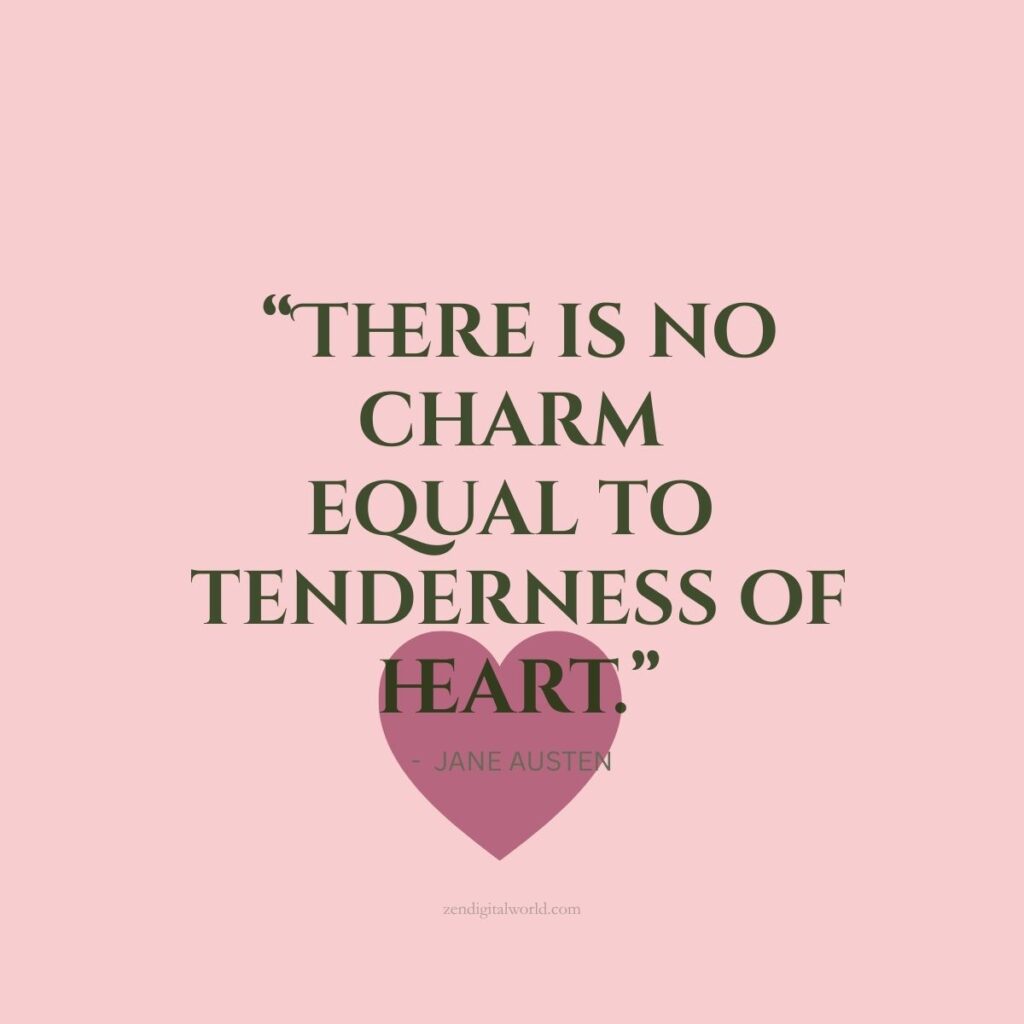
Tenderness of Heart
There is no charm equal to tenderness of heart.
— Jane Austen
What This Quote Teaches
Empathy for others is the real charm that quietly draws people closer.
True attraction does not come only from appearance, status, or clever
words, but from the ability to understand, care, and respond with
kindness.
When we show empathy, we create trust and warmth, making our
relationships deeper and more meaningful. Tenderness of heart is a
quiet strength that shapes lasting connections and genuine affection.
Seeking Adventure
If adventures will not befall a young lady in her own village,
she must seek them abroad.— Jane Austen
What This Quote Teaches
Meaningful experiences and opportunities do not always arrive on their
own, especially when we remain entirely within familiar surroundings.
Austen encourages curiosity and initiative. Adventure is not only about
travel; it is also the willingness to explore, learn, accept change,
and discover more about the world and ourselves.

Actions Define Us
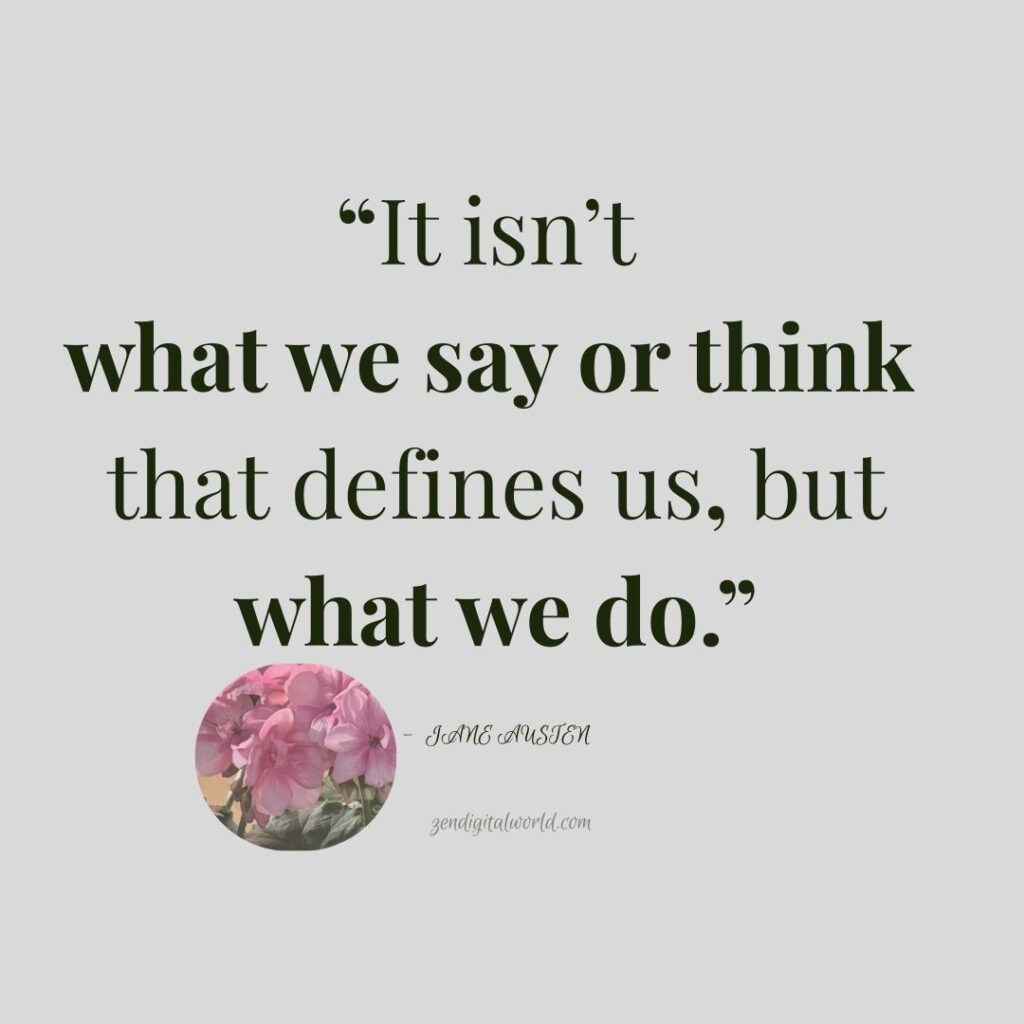
It isn’t what we say or think that defines us, but what we do.
— Jane Austen
What This Quote Teaches
Our true character is not shown by words or thoughts alone, but by our
actions. While it is easy to express good intentions, real meaning comes
from what we consistently do in daily life.
Actions reveal sincerity, responsibility, and integrity. This quote
encourages us to align our behaviour with our values and live with
purpose.
Vanity and Self-Deception
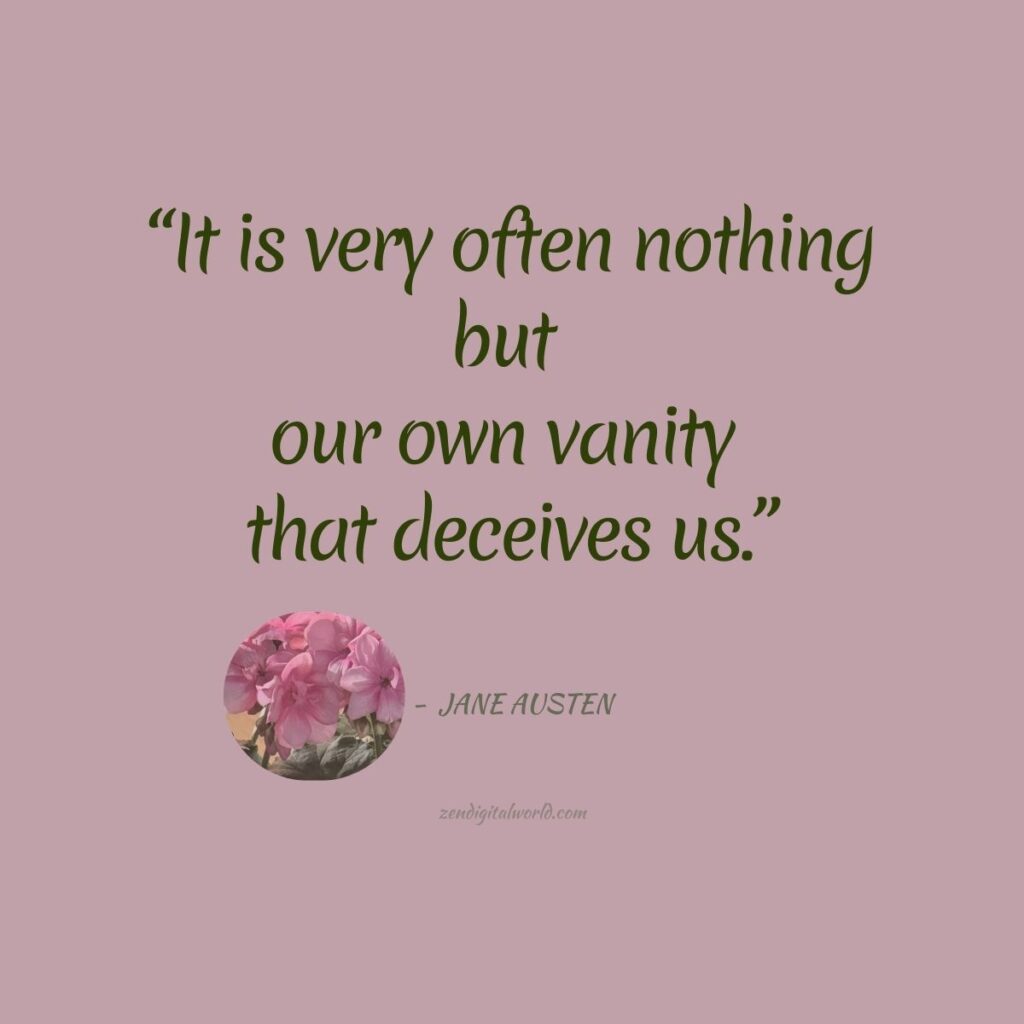
It is very often nothing but our own vanity that deceives us.
— Jane Austen
Vanity can influence how we interpret attention, praise, and other
people’s behaviour. When we see only what we want to see, we may mistake
hope or pride for truth.
Honest self-reflection helps us recognise assumptions and understand
situations more clearly.
True Friendship
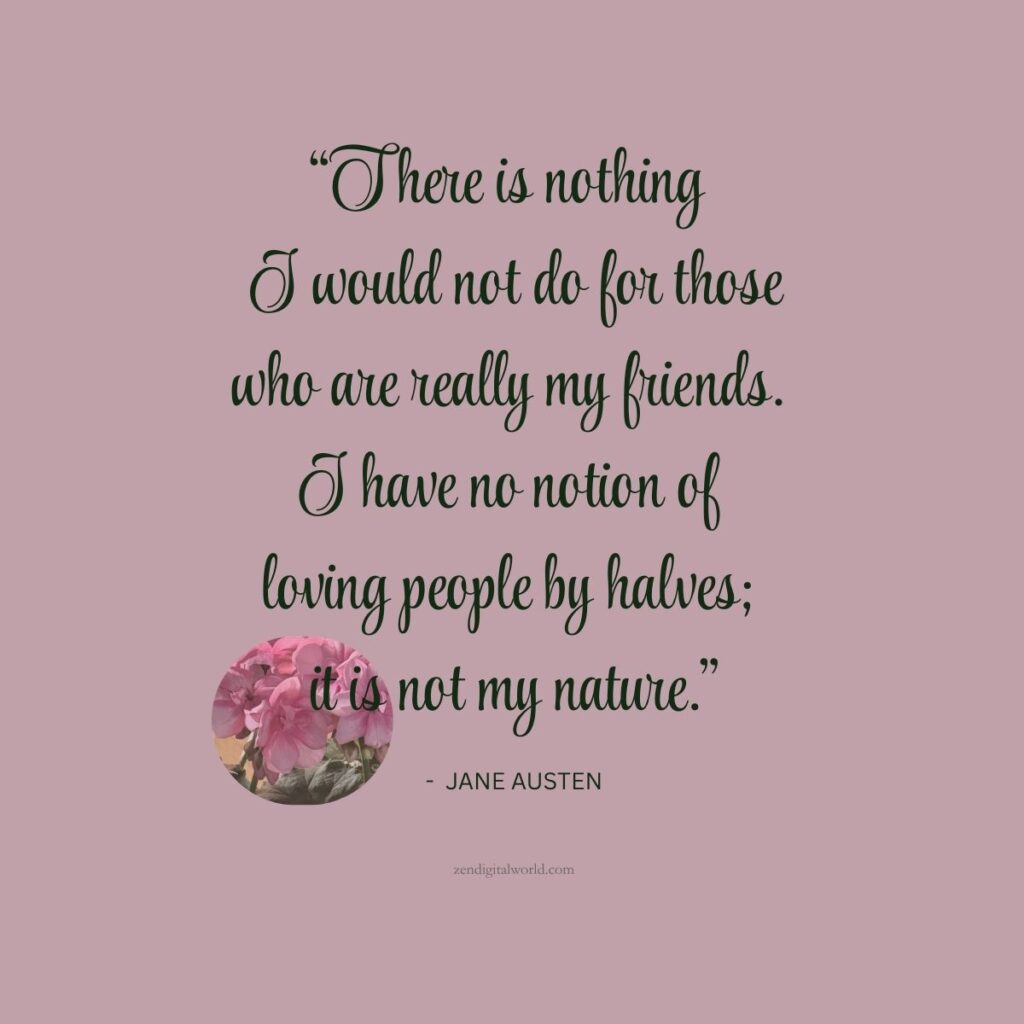
There is nothing I would not do for those who are really my friends.
I have no notion of loving people by halves; it is not my nature.— Jane Austen
True friendship is built on loyalty, commitment, and sincere care.
Austen’s words describe a wholehearted form of affection that does not
disappear when circumstances become difficult.
Wit and Confidence
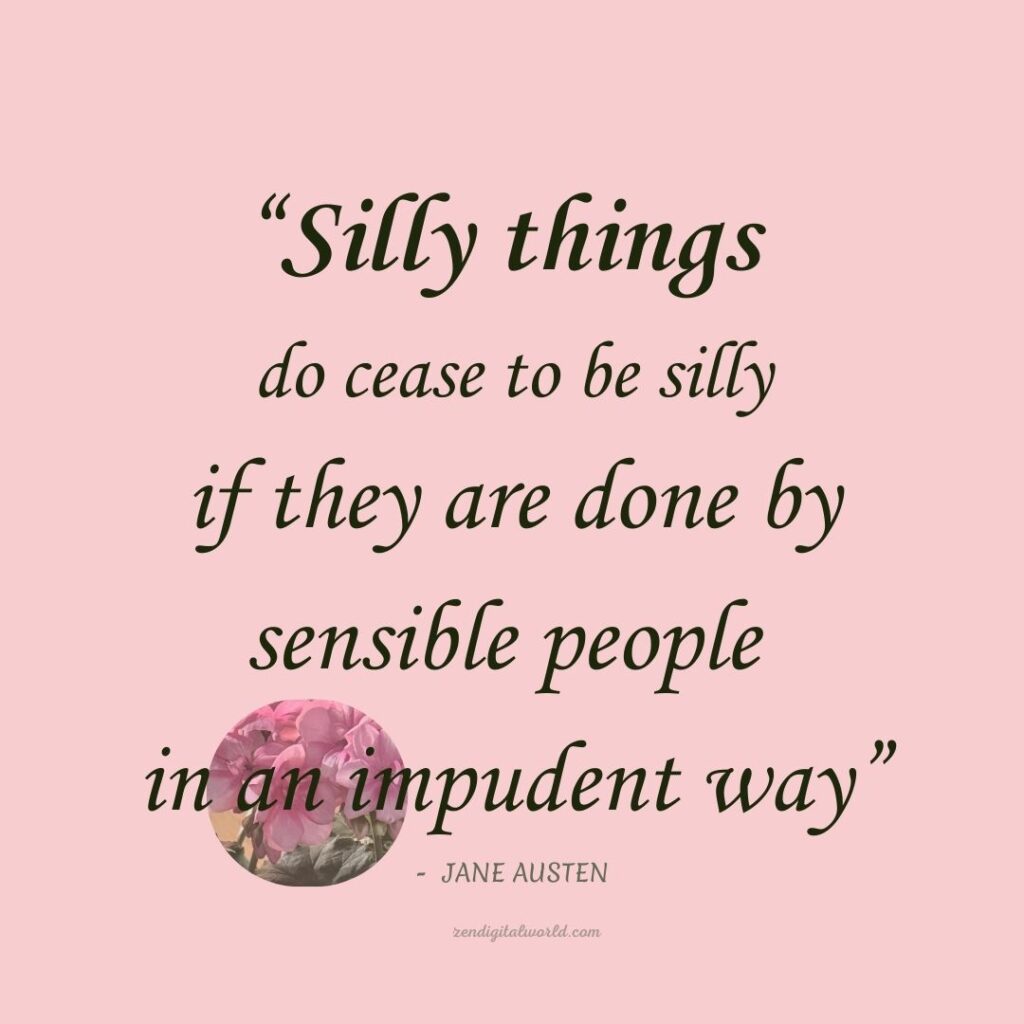
Silly things do cease to be silly if they are done by sensible people
in an impudent way.— Jane Austen
Confidence and social perception often change how behaviour is judged.
Austen uses humour to show that people sometimes accept the same action
differently depending on who performs it and how confidently it is done.
A Universal Truth
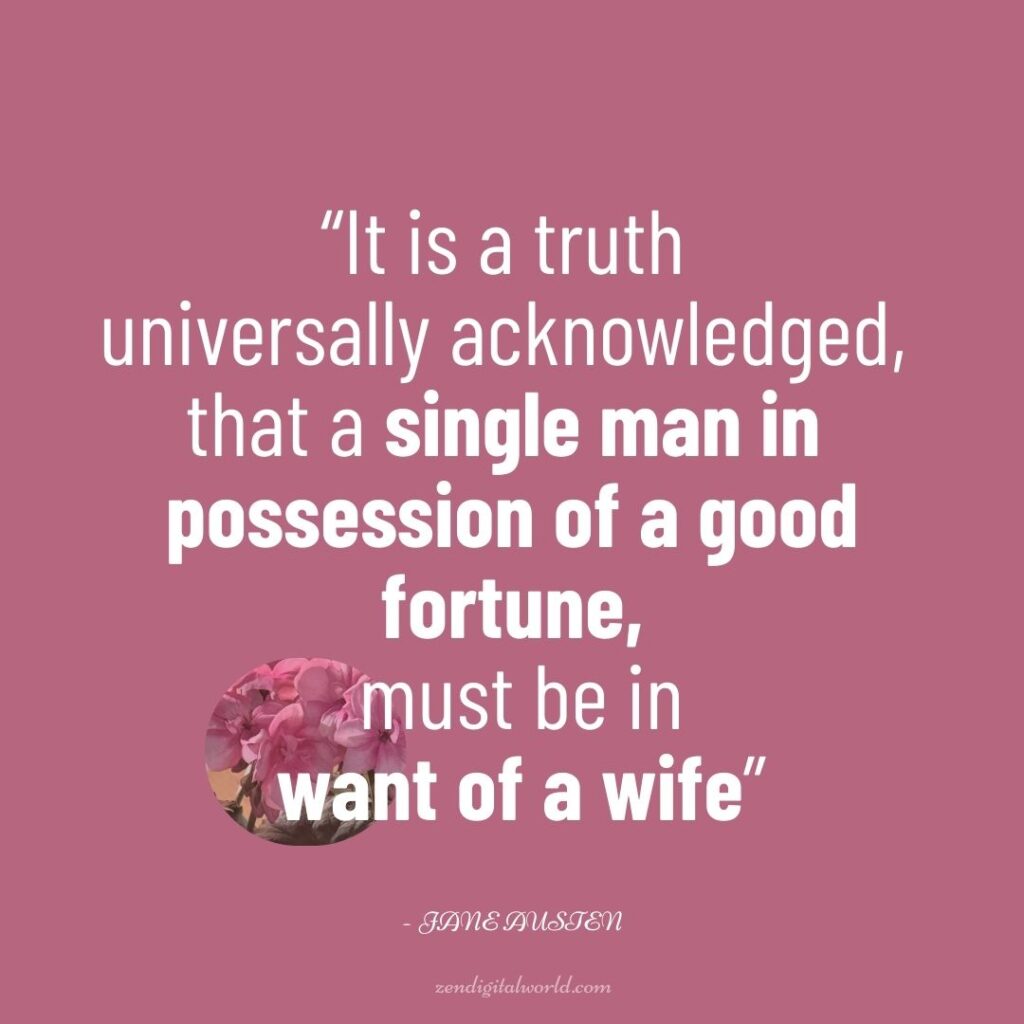
It is a truth universally acknowledged, that a single man in possession
of a good fortune, must be in want of a wife.— Jane Austen
This famous opening from Pride and Prejudice uses irony to
examine society’s expectations surrounding wealth, marriage, and status.
Its humour comes from presenting a social assumption as though it were
an unquestionable fact.
Vanity and Pride
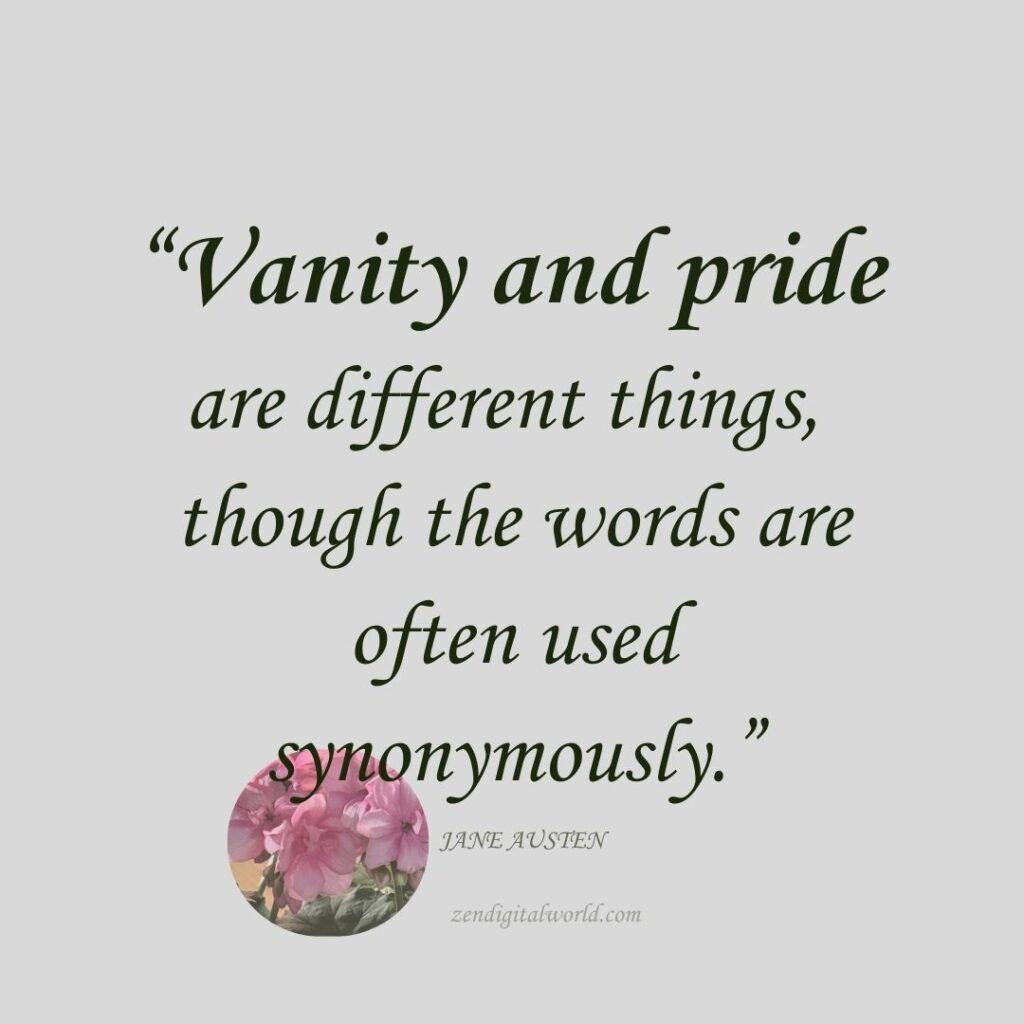
Vanity and pride are different things, though the words are often used
synonymously.— Jane Austen
Pride relates to how we value ourselves, while vanity is often connected
to how strongly we desire the admiration of others.
Understanding this difference can help us recognise whether confidence
comes from inner conviction or from the need for external approval.
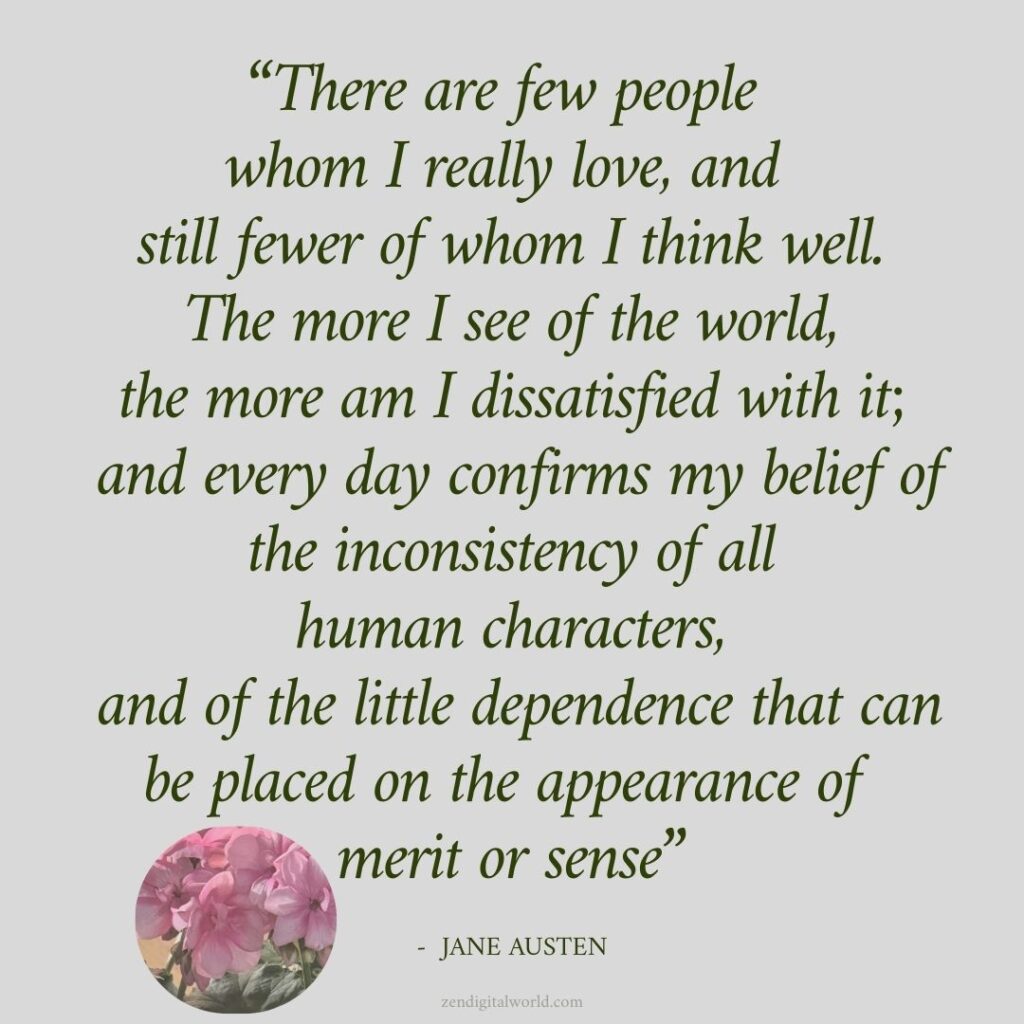
Observing Human Character
There are few people whom I really love, and still fewer of whom I
think well. The more I see of the world, the more am I dissatisfied
with it; and every day confirms my belief of the inconsistency of all
human characters.— Jane Austen
Austen frequently explored the difference between appearance and
character. People may appear sensible, generous, or honourable, but
their actions sometimes reveal inconsistency.
This observation encourages careful judgement while reminding us that
human behaviour is complex and rarely perfect.
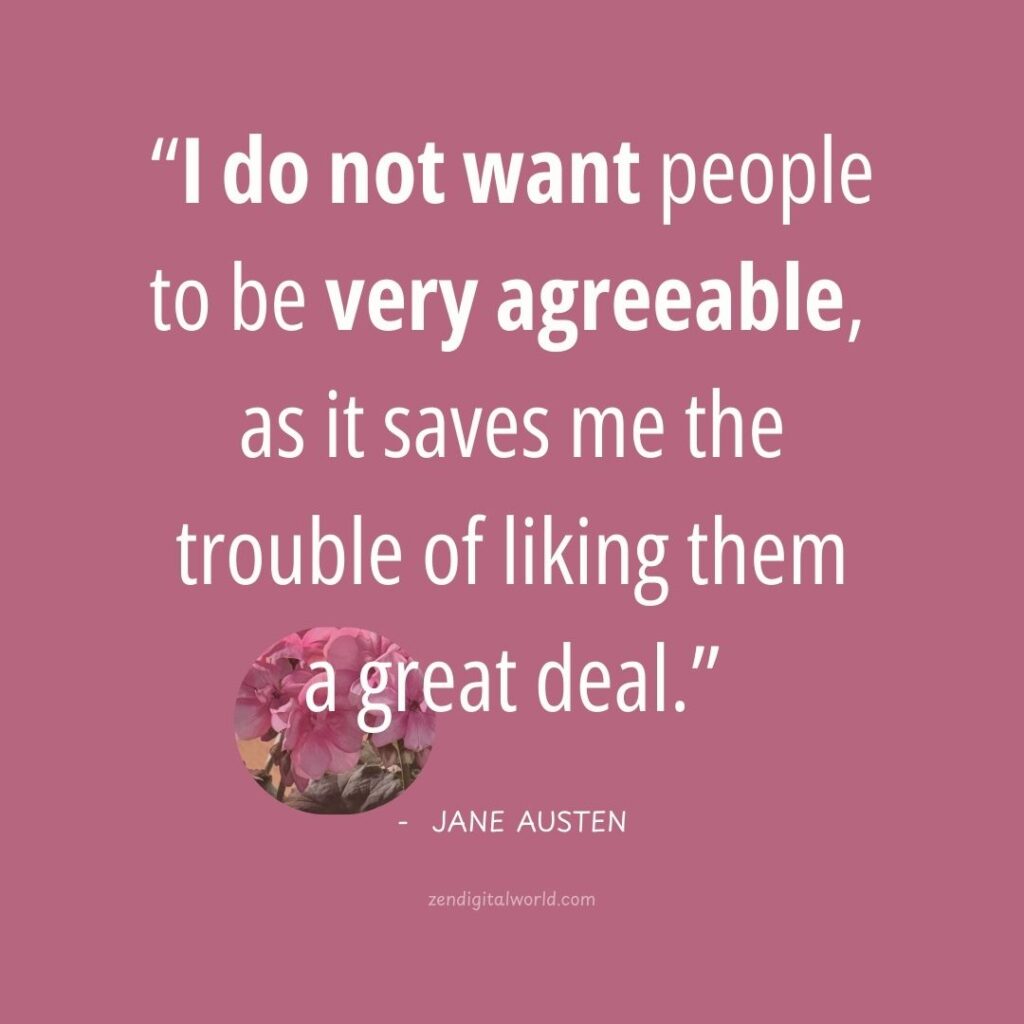
Wit and Social Distance
I do not want people to be very agreeable, as it saves me the trouble
of liking them a great deal.— Jane Austen
Austen’s humour often combines emotional honesty with social
observation. This playful statement reflects the risk of becoming
attached when we discover someone genuinely agreeable.
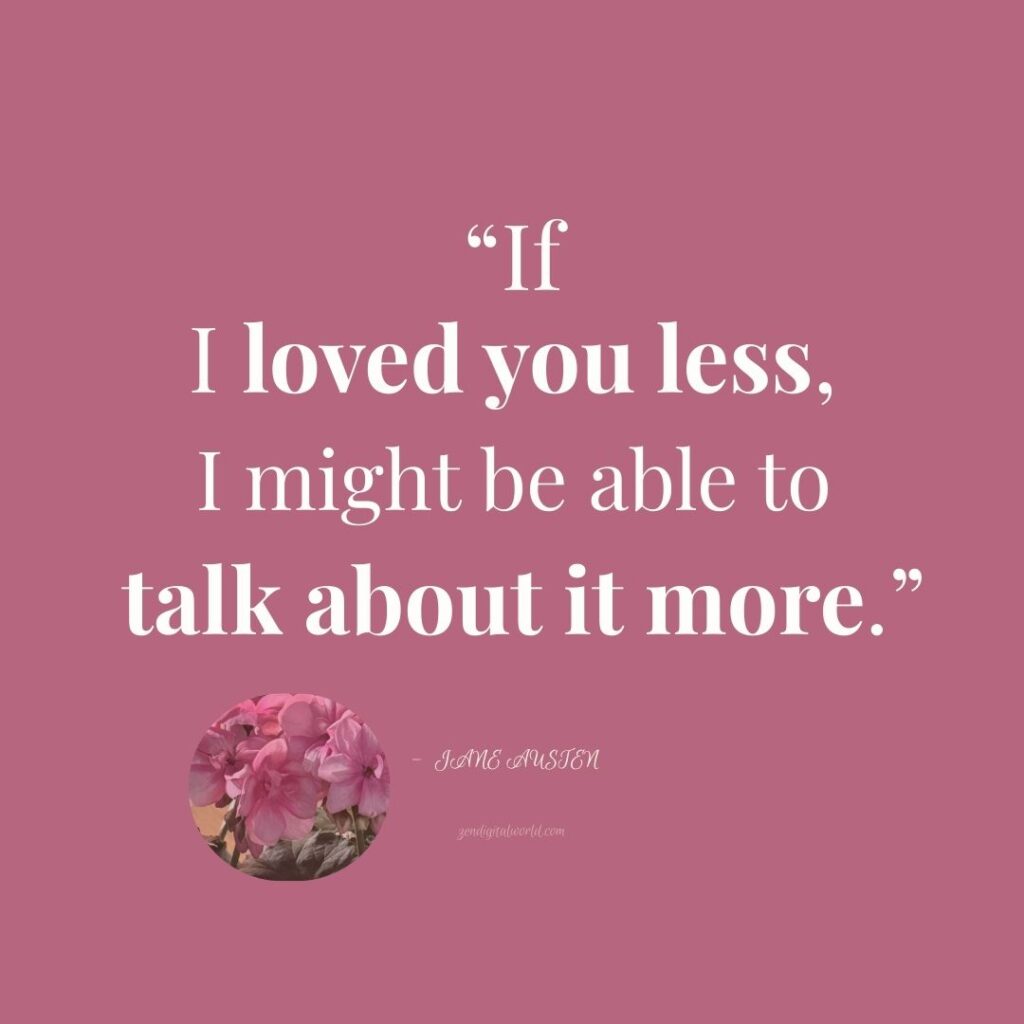
Love and Expression
If I loved you less, I might be able to talk about it more.
— Jane Austen
Deep affection is not always easy to express. Sometimes feelings are so
strong that ordinary language seems inadequate.
This quote suggests that silence or hesitation does not necessarily
indicate an absence of love. It may reflect the depth of emotion itself.
Save and Share
Jane Austen Quotes to Share
Save these Jane Austen quote images or share them with readers who enjoy thoughtful words about love, character, friendship, and life.
Continue Reading
More Famous Quote Collections


Read Slowly. Think Deeply.